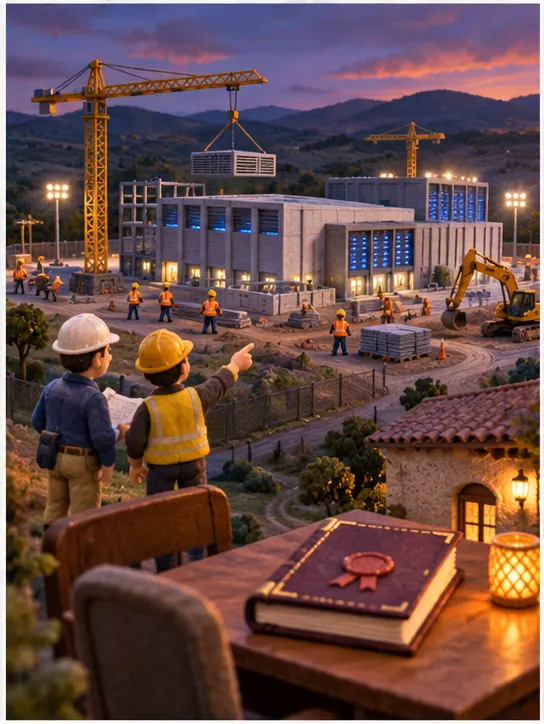
Illustration, AI-generated from the story text. Tap a panel to read the story through it.

OpenAI's senior leaders have discussed whether the midterm results force them to lower next year's capacity expectations, the Wall Street Journal reports. The Journal puts the conversation at a midterms event hosted by Jensen Huang, where tech executives voiced concern about the results. OpenAI gave no comment on capacity. We read that report through summaries, and no outside source confirms a number.

In public, two days after voters rejected data centers almost everywhere they were asked, the company published a National Community Compact and a Compute Campus Policy Blueprint this morning. It says it will pay the full cost of the electricity it uses plus the grid upgrades its sites require, publish water and electricity use for each site, prefer or , write a water plan for each community, and sign no nondisclosure agreements with public officials.

The blueprint asks lawmakers to turn such pledges into law. Chris Lehane said it has been in the works since August and that he has met dozens of lawmakers and candidates, and he wants the work largely done when Congress returns in late January.
The load-bearing words are in CNBC's account: the community input, published plans and NDA pledge apply to data centers OpenAI owns and operates. Much of its capacity sits with partners. SoftBank-backed SB Energy is building the 10-gigawatt Ohio campus, and a compact that binds only the owner's own buildings leaves those sites to someone else's promises. OpenAI told investors in February it targets $600 billion of total compute spending by 2030, and Evercore ISI counts Texas, Georgia and Ohio as more than 40% of planned US capacity. Texas and Ohio have just elected governors who back some form of .
OpenAI weighs lowering its 2027 capacity plans and promises to stop signing secret data center deals
OpenAI's senior leaders have discussed whether the midterm results force them to lower next year's capacity expectations, the Wall Street Journal reports. The Journal puts the conversation at a midterms event hosted by Jensen Huang, where tech executives voiced concern about the results. OpenAI gave no comment on capacity. We read that report through summaries, and no outside source confirms a number.
In public, two days after voters rejected data centers almost everywhere they were asked, the company published a National Community Compact and a Compute Campus Policy Blueprint this morning. It says it will pay the full cost of the electricity it uses plus the grid upgrades its sites require, publish water and electricity use for each site, prefer closed-loop or low-water cooling, write a water plan for each community, and sign no nondisclosure agreements with public officials. The blueprint asks lawmakers to turn such pledges into law. Chris Lehane said it has been in the works since August and that he has met dozens of lawmakers and candidates, and he wants the work largely done when Congress returns in late January.
The load-bearing words are in CNBC's account: the community input, published plans and NDA pledge apply to data centers OpenAI owns and operates. Much of its capacity sits with partners. SoftBank-backed SB Energy is building the 10-gigawatt Ohio campus, and a compact that binds only the owner's own buildings leaves those sites to someone else's promises. OpenAI told investors in February it targets $600 billion of total compute spending by 2030, and Evercore ISI counts Texas, Georgia and Ohio as more than 40% of planned US capacity. Texas and Ohio have just elected governors who back some form of moratorium. SourcesABBBC
Sources
- AOpenAI: Setting a new standard for responsible AI infrastructure (fetcher refused; read via CNBC and Engadget)openai.com
- BOpenAI pledges to halt NDAs in new data center policy proposal (CNBC)cnbc.com
- BOpenAI says it will protect local resources (Engadget)engadget.com
- BThe election day revolt that threatens America's AI boom (WSJ, read via Techmeme and summaries)wsj.com
- COpenAI reevaluates compute goals (Hugging News)huggingnews.com
This story ran in the Morning Brief of November 5th 2026.