Illustration, AI-generated from the story text. Tap a panel to read the story through it.
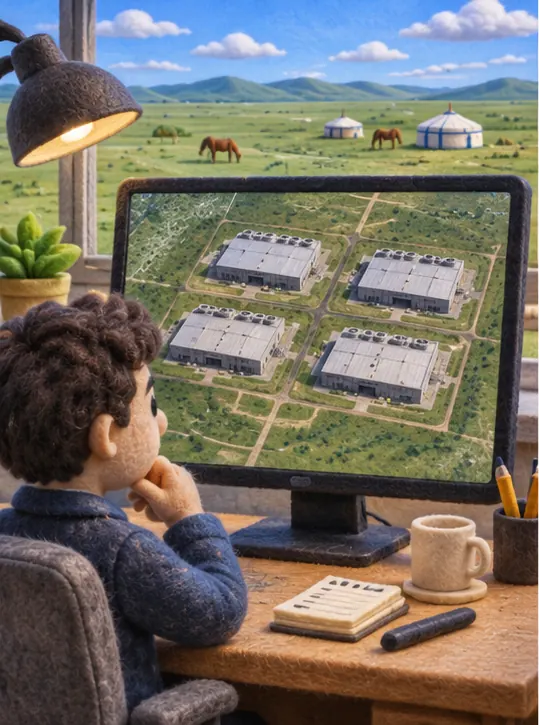
Epoch AI's Ben Cottier estimates from satellite images and permits that Huawei's Horinger campus in Inner Mongolia has four AI buildings with about 286 megawatts of IT power, housing about 105,000 910C and 8,000 Ascend 910B chips.
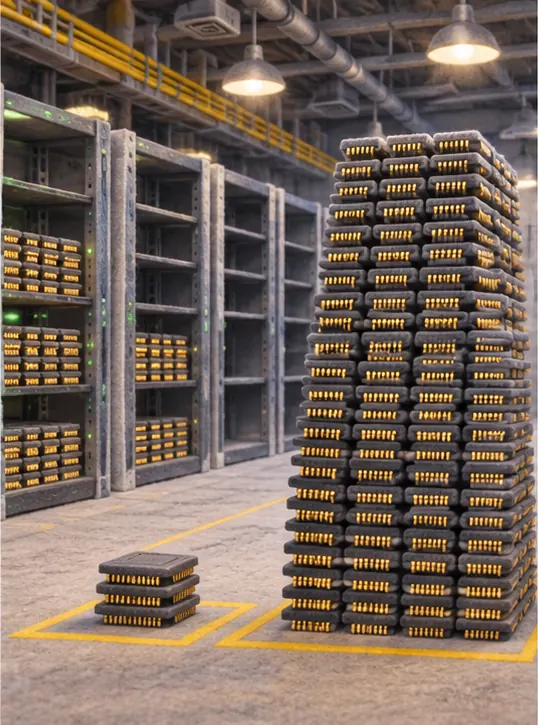
That comes to about 81,000 , with a 90% range of 36,000 to 141,000, against roughly 1.1 million at xAI's Colossus 2. The estimate assumes 76% of racks are full and no smuggled Nvidia chips, and the compute may be spread across clusters that cannot all train one model.
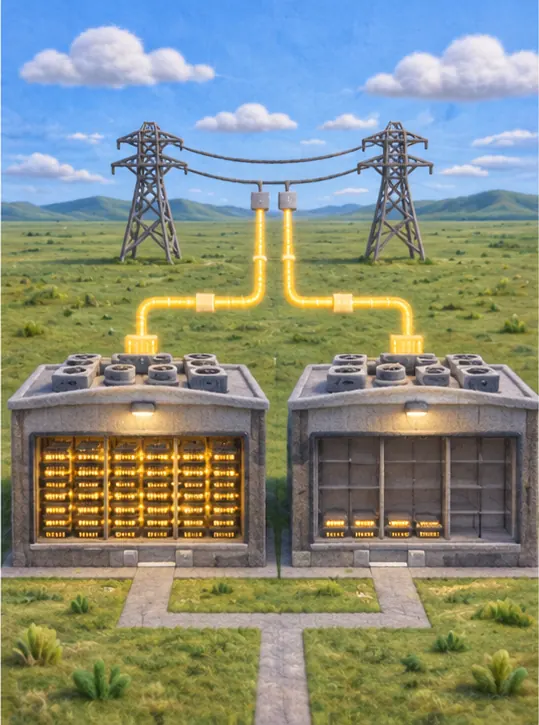
For the same power, Epoch says, US sites get about 2.5 times more compute.
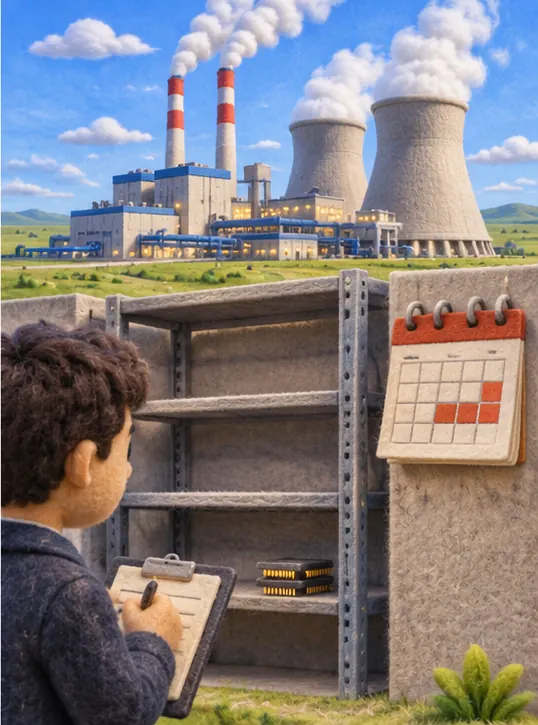
Epoch's conclusion is that China has the electricity and lacks the chips, and that the gap lasts through about 2028, when Horinger could reach about 141,000 H100-equivalents. It is the most concrete public measure yet of what have bought, and it is one site.
Huawei's biggest AI campus has about 7% of the compute of xAI's Colossus 2, Epoch estimates
Epoch AI's Ben Cottier estimates from satellite images and permits that Huawei's Horinger campus in Inner Mongolia has four AI buildings with about 286 megawatts of IT power, housing about 105,000 Ascend 910C and 8,000 Ascend 910B chips. That comes to about 81,000 H100-equivalents, with a 90% range of 36,000 to 141,000, against roughly 1.1 million at xAI's Colossus 2. For the same power, Epoch says, US sites get about 2.5 times more compute.
Epoch's conclusion is that China has the electricity and lacks the chips, and that the gap lasts through about 2028, when Horinger could reach about 141,000 H100-equivalents. The estimate assumes 76% of racks are full and no smuggled Nvidia chips, and the compute may be spread across clusters that cannot all train one model. It is the most concrete public measure yet of what export controls have bought, and it is one site. SourcesA
Sources
This story ran in the Morning Brief of November 8th 2026.